

There is a war happening inside your pet right now.
Not a dramatic one. Not one you can always see. But it’s happening in the gut, where somewhere between 70 and 80 percent of the immune system lives. Good bacteria fighting bad. Enzymes trying to break down food that was never designed to be digested easily. A lining working to absorb nutrients from ingredients that, frankly, aren’t giving it much to work with.
Most pets are losing that war slowly. Not all at once. Just gradually — in the stools, the itchy skin, the anxious behavior, the coat that’s lost its shine. The body keeps score.
This is why I talk about gut health constantly. And it’s why, when people ask me what supplements I’d start with, I always come back to two things: a quality probiotic and digestive enzymes. Often together.
Why processed food makes this non-negotiable
When food is heavily processed, the natural enzymes that help digest it are destroyed. Heat kills them. So does the extrusion process that turns raw ingredients into that hard little kibble pebble. Your pet’s pancreas picks up the slack, producing enzymes to compensate, and over time that’s a tax on a system that was never meant to carry it alone.
The gut microbiome takes a hit too. The community of bacteria living in the digestive tract gets disrupted every time your pet gets antibiotics, receives a vaccine, gets a monthly dose of Simparica, eats something they shouldn’t, goes through a stressful event, or simply eats a diet that doesn’t support microbial diversity. For most pets eating commercial food, that’s every single day.
This is the same story for humans, by the way. Overprocessed food, depleted microbiomes, systems working harder than they should. The gut doesn’t lie in any species.
Probiotics replenish the good bacteria. Digestive enzymes help break down food so the body can actually absorb what it’s eating. They work differently, and they work together.
But my pet seems fine
This is the part I want you to sit with for a moment.
You might look at your pet and think: their poop seems normal, they’re not sick, no major issues. Maybe that’s true on the surface.
Here’s what I’d ask you to consider: if your pet has eaten kibble at any point in their life, or freeze-dried food, or even the most optimized raw and human-grade diet on the market, their gut is still operating at a deficit. Because the problem isn’t just what’s in the bowl today. It’s what the food supply and production chain has systematically stripped out over years. The beneficial bacteria, the natural enzymes, the whole-food compounds that a species-appropriate diet would have delivered before we decided to process everything into shelf-stable convenience.
Your pet’s body is adapting. It’s compensating. It may look fine. That is not the same as thriving.
Houston
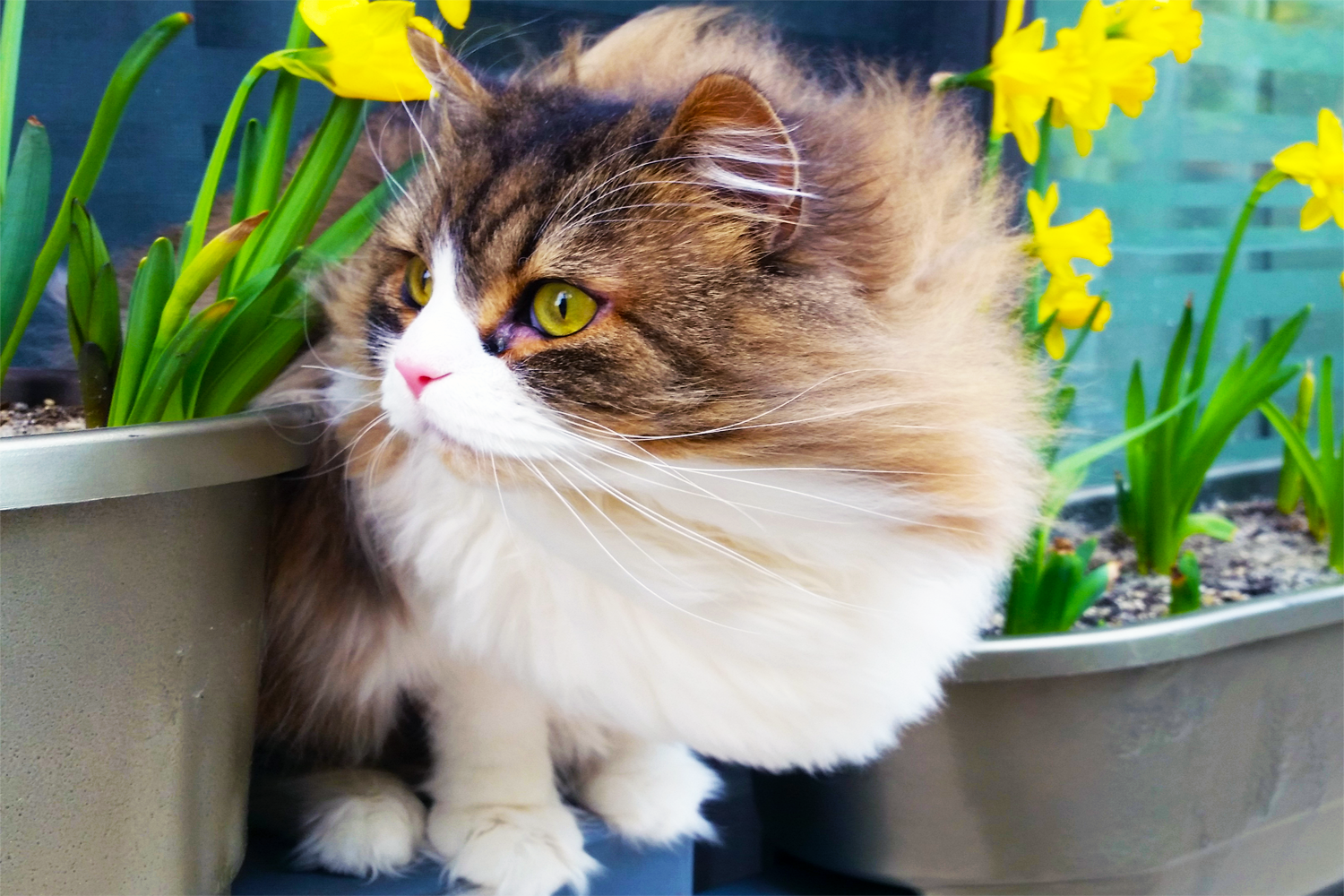
When I adopted Houston, the traditional vet had a recommendation: put him on Pepcid AC. Daily. Probably for life.
He was a mess. Pooping blood. Clearly uncomfortable in ways I couldn’t fully see. And the answer being handed to me was a human antacid, indefinitely, for a cat.
That went against everything I was learning about nutrition, about equipping the body with what it needs so it can actually heal. There is a time and a place for medication. This wasn’t it. His gut needed rebuilding, not suppressing.
So I reached for food instead. Real, human-grade food. I started nursing his digestive system back slowly, supplement by supplement, meal by meal, always looking for better tools as they became available.
Houston is now somewhere around 13 years old. A senior citizen. His integrative vet has remarked on how young his bloodwork looks — a body that’s been given what it needs to fight back. That’s the goal. Everything we’re doing is aimed at boosting his gut microbiome and giving his system a fighting chance against a world saturated with toxins, processed food, and chemicals.
About a year ago I was introduced to Probenz-VM, and it consolidated a couple of supplements into one for our whole crew. Every morning, everyone gets their appropriate scoop on their food. Houston will look at me with an expression that is unmistakably: Mom, where’s the green stuff? He waits for me to add it. Then he eats.
Cats don’t perform enthusiasm they don’t feel. He just knows.
A word on FortiFlora
While we’re here — if you’re using Purina’s FortiFlora, this section is for you.
I know it’s everywhere. Vets hand it out routinely. It’s cheap and familiar. But look at what you’re actually getting:
One strain of bacteria (Enterococcus faecium SF68). 100 million CFU. Inactive ingredients: liver flavor and yeast.
The liver flavoring exists because without it, most pets wouldn’t touch it. One strain. A flavor enhancer to make it palatable. That’s what’s being sold as probiotic support.
Comparing FortiFlora to what I’m about to share with you is like comparing a garden hose to a fire hydrant. The category name is the same. The actual support is not in the same universe.
You’re paying for packaging and palatability, not gut health. Your pet deserves better.
Probenz-VM
Probenz-VM from VDI Laboratory is not a simple probiotic. It’s a synergistic formula backed by a 34-page clinical research booklet and built by AlphaVet Science under strict GMP standards. No dairy, corn, gluten, wheat, or soy. And it shows in what’s actually inside.
Per scoop, you’re getting nine probiotic strains at 625 million CFU each, plus Saccharomyces boulardii at 1 billion CFU. That’s the yeast strain specifically studied for protecting the microbiome during antibiotic therapy and treating antibiotic-associated diarrhea. Then there are six digestive enzymes covering fats, carbohydrates, proteins, and fiber. Cats and dogs don’t naturally produce cellulase — it doesn’t exist in their digestive systems — and the supplemental enzymes in Probenz help liberate nutrients like zinc, selenium, and linoleic acid that would otherwise remain locked in fiber and pass through unabsorbed.
The botanical ingredients are where it gets interesting. Marshmallow root and slippery elm bark are both demulcents — they form a soothing film over irritated mucous membranes. If your pet has a damaged gut lining, inflammation, or gastritis, these two herbs are doing real protective work. Spirulina is included for immune support; studies in dogs show enhanced vaccine response and gut microbiota stability with spirulina supplementation. Kelp supports metabolism and helps suppress harmful bacteria in the gut. Flaxseed contributes omega-3s, soluble and insoluble fiber, and lignans that research has linked to reduced risk of colon carcinogenesis.
And then there’s L-glutamine. It’s the primary fuel source for the cells lining the gut wall. When the lining is damaged from stress, poor diet, antibiotics, or chronic inflammation, L-glutamine is part of how it heals. You cannot rebuild the gut without it.
The encapsulation technology matters too. The probiotic bacteria are protected by a physical barrier made from pectin, inulin, and gums that allows them to survive stomach acid and reach the gut where the work actually happens. A probiotic that dies before it gets there doesn’t do much.
Feline-specific research supports synbiotic use during and after antibiotic therapy, with studies showing reduced vomiting and GI distress lasting at least six weeks after discontinuation. For cats like Houston, that research isn’t abstract.
One honest note: Probenz comes in plastic containers. I’d love to see glass. Reducing plastic matters in pet health as much as anywhere, and it’s something I pay attention to.
Shop Probenz-VM at VDI Laboratory
Primitive Probiotics
Primitive Probiotics by Dr. Karen Becker at Proactive Paws takes a different approach, and it’s one I’ve been paying close attention to as it was just recently brought to market.
Most pet probiotics are repurposed human formulas. The strains weren’t selected for a dog or cat’s gut. They were selected for a human’s, then relabeled. Primitive Probiotics is built around three distinct microbial ecosystems: ancestral strains from wild wolves, species-specific strains sourced from healthy domestic dogs, and soil-based organisms resilient enough to survive stomach acid, heat, and stress.
It includes LP815, a patented strain studied for anxiety reduction and calmer behavior, and Saccharomyces boulardii for antibiotic protection. The inactive ingredient is organic pumpkin — a whole-food prebiotic that supports the gut lining without the SIBO risk that isolated prebiotics can carry.
And they got something right that I want to call out: Primitive Probiotics comes in glass jars. For those of us paying attention to plastic reduction and what it means for our pets’ long-term health, that choice matters.
This is a daily optimization product. For a healthy pet you want to keep healthy, or one whose microbiome needs rebuilding with the right biological foundation.
Shop Primitive Probiotics at Proactive Paws
How I use them
If your pet is in active gut distress, recovering from antibiotics, or showing real symptoms, start with Probenz-VM. The enzymes, the botanicals, and the encapsulation are what that situation calls for.
For daily maintenance and long-term microbiome health, Primitive Probiotics is built for this. The species-specific strain sourcing gives it an edge as an everyday product.
If cost isn’t a concern, use both. They aren’t redundant. Probenz handles the enzymatic and therapeutic work. Primitive builds and diversifies the microbial community. Together they cover more ground than either does alone.
If you can only choose one for your pet, I’d lean Primitive. The strain science is more sophisticated than anything else I’ve seen at this price point.
My current thinking: both are necessary right now. Long term, it’s possible that Primitive Probiotics alone may be enough for daily maintenance once the gut is in a strong place. But we’re not there yet. I’d rather build the foundation right than skip steps.
No coupon codes for either product at the moment. When I have them, you’ll be the first to know.
The kefir conversation
One more thing — and this one costs almost nothing.
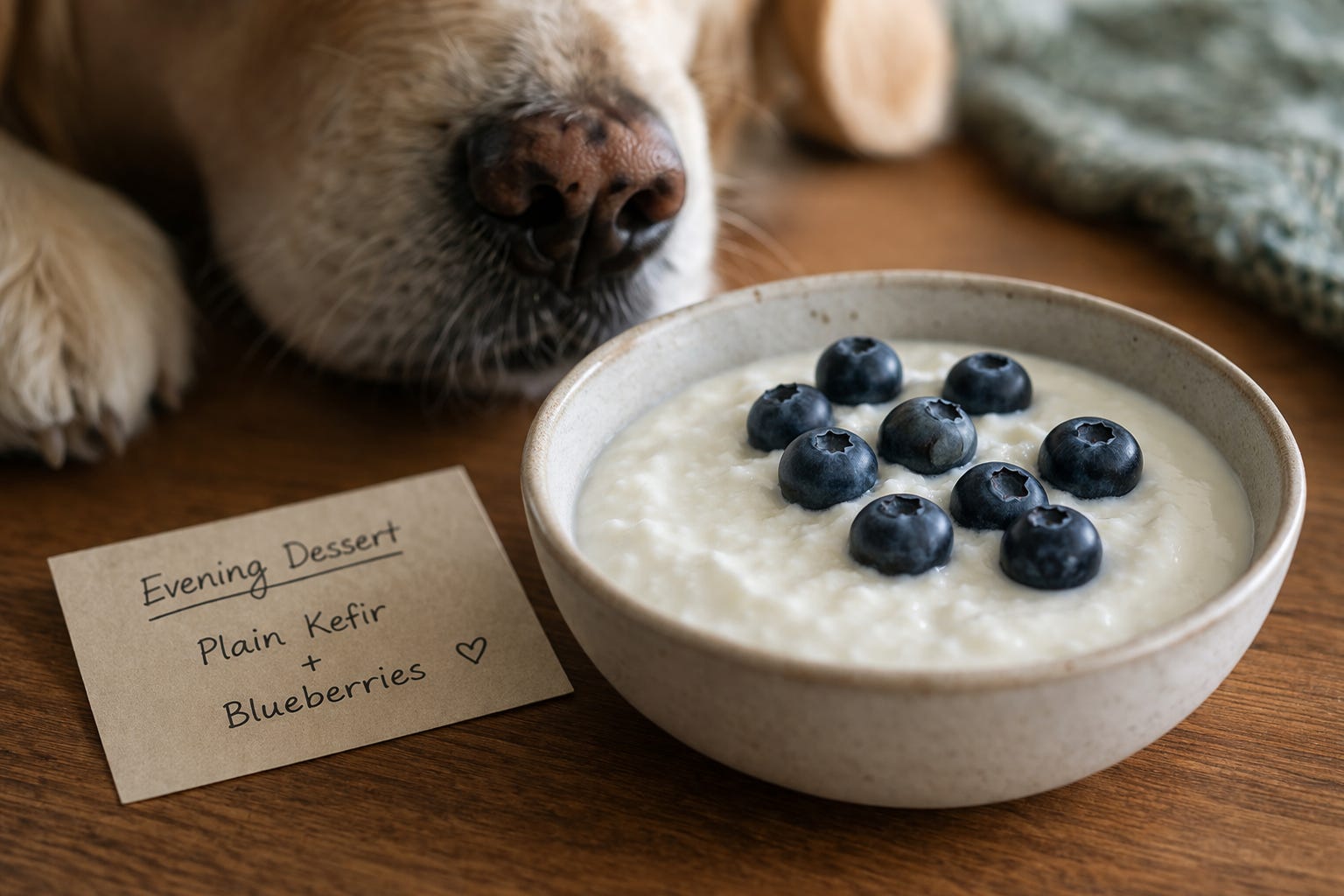
Plain kefir. Evening ritual. Small bowl with berries on top.
At my home, this is our evening meal/dessert. The live cultures in kefir go to work overnight while your pet is sleeping. The body’s repair systems are most active at rest. You’re sending reinforcements into the gut at exactly the right window, letting the good bacteria fight their wars while your pet dreams.
You can use goat kefir or plain dairy kefir. Both work. I usually pick up the Whole Foods store brand plain kefir for around $4 for 32 ounces. Lifeway is another solid option, widely available at grocery stores, Target, and most major retailers. Plain only. No added sugar, no flavoring.
For berries: blueberries are my first choice. We usually have a bag of frozen blueberries to pull from. Raspberries and strawberries work too. Use whatever your pet will actually eat. One of our clients, Handsome Hank, has made his feelings about blueberries abundantly clear - my first dog to not care for blueberries. We are currently awaiting his verdict on raspberries and any other berries that may meet his approval list. He loves the kefir, and that’s what matters most.
Kefir is not a replacement for a quality probiotic. It’s a companion to one.
Let’s talk about your pet
If you want to go deeper on your pet’s gut health, or any aspect of their nutrition and wellness, this is exactly what integrative pet health coaching is for.
We work with pet parents one on one to build a personalized plan: what to feed, what to supplement, what questions to ask your vet, and how to put it all together for your specific animal. Every pet is different. A cat recovering from gut damage needs a different approach than a healthy young dog being optimized.
The gut is where health starts. In every species, at every age.
Fine is not the finish line.
If this resonated, subscribe to Integrative Pet Parent. This is where the real conversation about pet health lives.