

Raw meaty bones are one of the simplest ways to shift a dog’s diet toward real food. The original toothbrush. The original calcium source. Here is what I have used for years, and why it works.

Sophie knew exactly what she was doing.
She would take her beef rib bone and set it down just far enough away from her body to make it look like she wasn’t that interested. Like maybe she was done with it. Like maybe she’d leave it for someone else.
She wouldn’t.
The moment another dog in our pack even glanced in that direction, took the smallest break from their own bone, Sophie would materialize. Full gangster mode. All of these are mine.
She ran that con every single time. And it worked every single time.
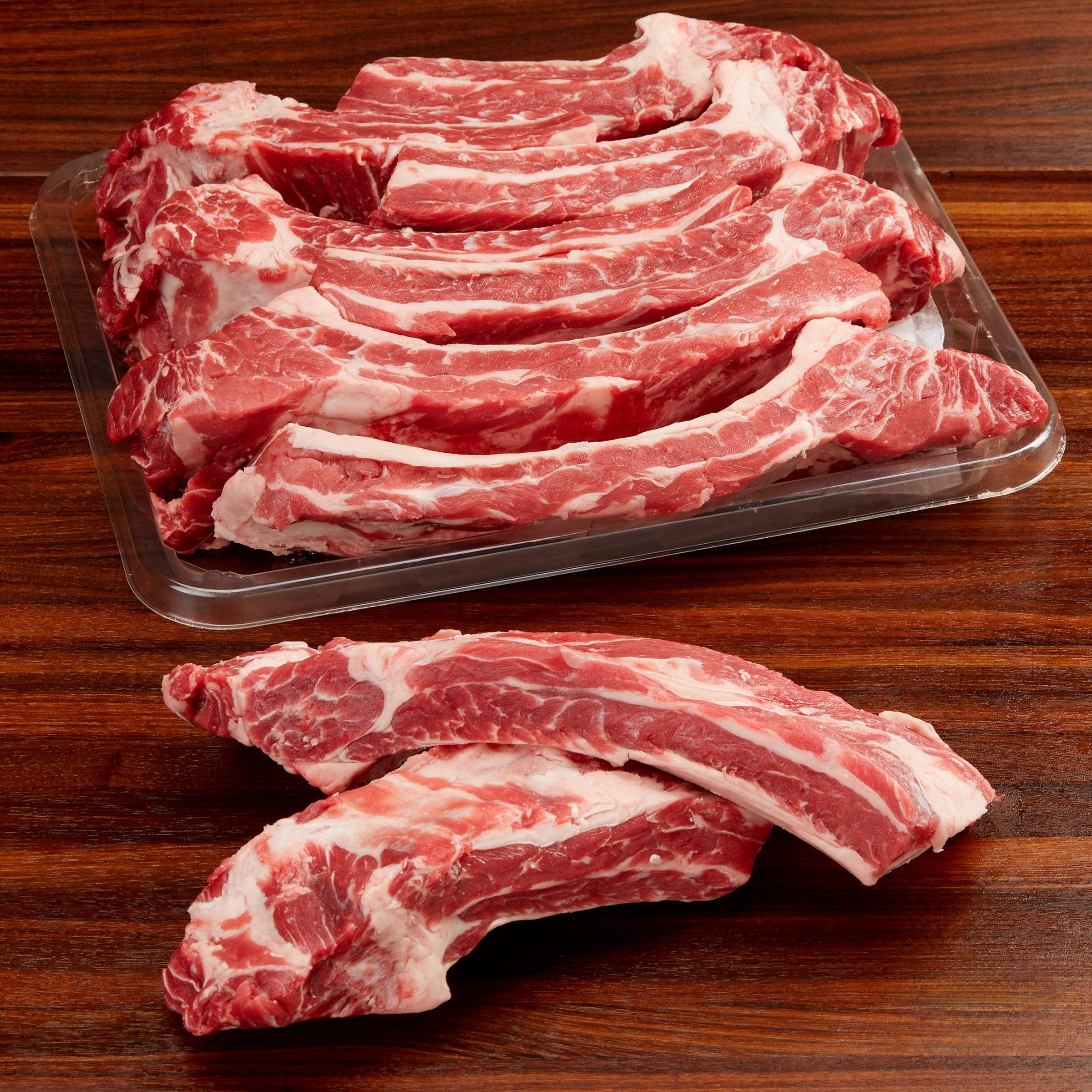
I have been giving dogs beef rib bones for years. I started buying them at Whole Foods when I was running my pet services company, keeping a batch on hand for the dogs in our care. Now I grab them at Costco. Same bones, better price. I keep them in my freezer for Bella.
The routine is simple. Buy the rack, separate the ribs, wrap each one in parchment paper so they don’t stick together, and freeze. Every few days or so, Bella gets one.
She has me trained. After bath and grooming time, she goes directly to the freezer and sits. She doesn’t ask. She doesn’t bark. She just sits and stares at the freezer door with the absolute certainty of someone who knows exactly how this ends.
She is not wrong.

Here is why I love this treat, and why I have recommended it for years.
Beef ribs are one of the best natural options you can give a dog. The bone itself is a raw meaty bone, which means it is safe to chew. Raw bones flex. They do not splinter the way cooked bones do. As your dog works through it, the bone acts like a toothbrush, scraping plaque off teeth in a way that no dental chew in a plastic bag can replicate. The bone itself is also calcium in its original, bioavailable form, the way nature delivered it long before anyone thought to add a synthetic premix to a bag.
Beyond the dental and nutritional benefit, there is the mental stimulation piece. A dog working a bone is a dog in a flow state. Focused. Calm. Satisfied in a way that a five-minute walk does not always achieve. For high-energy dogs especially, that kind of sustained engagement matters.
The chewing itself does work most pet parents do not see. It generates saliva, supports jaw and neck musculature, and contributes to the kind of gut health that real food and real chewing build together.
And it is a high-value treat, which means it is useful. For training. For rewarding calm behavior. For building the kind of trust that makes a dog feel genuinely secure in their environment.
A few details worth knowing before you start.
Always give raw, never cooked. Cooked bones splinter and become dangerous. Raw bones flex. That distinction matters.
Supervise the first few times, especially with a new dog or one that tends to gulp rather than chew. You want to know how your dog handles it before you walk away. I make it a point to only give meat bones when I am nearby and can keep an eye on things.
Size matters. The bone should be large enough that your dog cannot swallow it whole. For small dogs, a single separated rib is usually right. For larger dogs, knuckle bones or marrow bones from a quality butcher are usually the better call.
And always make sure fresh water is nearby. Chewing is work.

Sophie ran her bone con on every dog who came through our doors. It did not matter if they were twice her size. Confidence, she understood, was its own kind of currency.
Bella just sits by the freezer and waits.
Two different personalities. Same absolute certainty that the beef rib bone is coming.
They are not wrong to believe that.
“Wellness is not just the absence of disease. It is actually recognizing that we can make intentional lifestyle choices on a daily basis that ultimately create abundant health.”
— Dr. Karen Becker
This is the north star of Integrative Pet Parent and of every Second Opinion I do. Wellness is daily intentional choices. Food, movement, supplements, stress, environment. The purpose of this work is helping you make those choices with clarity and confidence.
A raw meaty bone is one of those choices.
If you want individualized guidance on what to feed, which brands to trust, and how to bridge integrative nutrition with the conventional veterinary care your pet still needs, I work one-on-one with pet parents through the Integrative Second Opinion. We sit down together, look at your pet’s history, bloodwork, and current protocol, and build a path forward rooted in species-appropriate care.
Know a pet parent who needs to read this? Share it.